
The black smoke news we got from the NBC Universal lot yesterday was neither unexpected nor unwarranted. But as someone who has been an unabashed fan of multi-camera comedy, let alone someone who personally and professionally profited from them, the story THE HOLLYWOOD REPORTER’s veteran observer Rick Porter, someone else who’s been around long enough to remember when there were far more renewals in the genre to write about, dropped yesterday had just a tad more sting attached to it than usual:
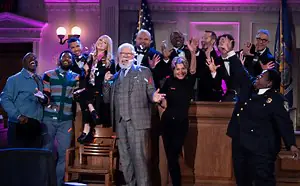 NBC’s revival of Night Court has heard its last case. The network has canceled the comedy after three seasons. The show aired its third season finale, which will now serve as a series ender, on Tuesday.
Night Court stars Melissa Rauch (who also executive produces) as Abby Stone, a judge in Manhattan’s often chaotic night court and the daughter of Harry Stone, the lead character in the original 1984-92 series (who was played by the late Harry Anderson). John Larroquette reprised his role from the original series as attorney Dan Fielding; the season three cast also includes Lacretta, Nyambi Nyambi and Wendie Malick. Marsha Warfield made several appearances as Roz, her character in the prior series.
As the DEADLINE duo of Rosy Cordero and yep, the intrepid Nellie Andreeva noted in this case the actual numbers without dollar signs pretty sealed its fate:
The news is not surprising since NBC has been looking to make cuts as it is preparing for basketball coverage next season under the $2.5B a year deal with the NBA. Night Court, a reboot the original 1984 sitcom, was considered vulnerable — after a strong early run early on, the comedy has been posting significant year-to-year drop-off this season as the nostalgia factor may have worn off.
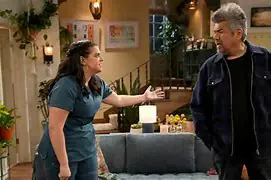 TV SERIES FINALE confirms the degree of decline: both key demo rating and total viewership have dropped by a third, which is a deceleration that exceeds even the accepted level of linear TV erosion these days. And they indeed were not the only victim of those priorities of b-b-b-b-b-basketbaaaaaall that were reported: NBCU is also cutting ties with several other in-house produced shows, including the highly anticipated SUITS L.A. spinoff and the odious LOPEZ VS. LOPEZ. But the fact that NIGHT COURT eminated from a source other than the NBCU family of networks created all the more consternation among those still hopeful and perhaps naive enough to think that there’s anything close to a level playing field out there for the studio sides of legacy media companies. That’s hardly been the case since the sunsetting of financial interest rules–facts of life we mused about as recently as earlier this week. Yes, there are exceptions–Warner Brothers, the studio behind NIGHT COURT, has managed to supply both ABC and CBS with hit half-hours, ABBOTT ELEMENTARY and this year’s most successful freshman comedy, GEORGIE AND MANDY’S FIRST MARRIAGE. But the message continues to be crystal clear–you’d better be a runaway hit to even warrant consideration.
And the harsher truth from the studio side is that even when a network or platform outside of your own vertically integrated cousin shows you some love, you bear significant downside risk. Your company doesn’t fully benefit from first-run utility, both in viewership and buzz. and English-language comedies have rarely traveled well beyond North America. Unless you survive long enough to produce a significant enough number of episodes to have a bulk value to a streamer, let alone the modest potential that a traditional linear off-network sale can offer, you’re in the worst of all possible financial worlds.
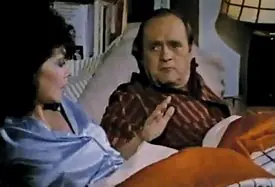 NIGHT COURT’s scorecard is especially indicting. 47 episodes spread out over three modestly promoted partial seasons, with a number of cast changes and growing pains along the way. Indeed, that was true of the OG NIGHT COURT, whose earlier episodes included two different bailiffs and a different DA–and, frankly, relative to their times their ratings weren’t stellar, either. But in a more patient and supportive world the show did finally find a chemistry and took better advantage of its talent to eventually become a critical component of Must-See TV which resulted in roughly 200 episodes. This iteration seemed to be finally jelling, especially with the final episode’s cliffhanger that brought Rauch back together with her BIG BANG THEORY spouse, Simon Helberg, in a mysterious cliffhanger that revealed him to be her husband on this show as well. Maybe not quite the jaw-dropper as Bob Hartley’s dream, but intriguing nonetheless. But I suppose we’ll now never know.
When the 2024-25 season began we mused rather nervously about the precarious state of multi-cameras as a genre. Fortunately, GEORGIE AND MANDY did work well and NBC’s multiple interests in Reba McIntire ensured that HAPPY’S PLACE would somehow be the chosen one. ABC also found some mid-season success with Tim Allen’s SHIFTING GEARS. But the latter two shows are both from in-house suppliers that ensure carriage on sister streaming services. And it’s pretty much a given that all three will be paired with single-camera shows, as will the final season of CBS’ THE NEIGHBORHOOD with DMV, as POPPY’S PLACE couldn’t even make it past season one. And things aren’t much rosier on the non-linear side: FRASIER has once again left the building and the sad loss of Linda Lavin of Hulu’s MID-CENTURY MODERN–the Sophia-like glue that held together the uneven cast of this gay male homage to THE GOLDEN GIRLS–all but assures that won’t be moving forward.
That all means fewer jobs for actors and producers who thrill to the immediacy and honesty of a live studio audience. Less reason for half-hours to shoot in Los Angeles at all. And in both cases that’s absolutely nothing to laugh about. With apparently no grounds for appeal. The numbers simply don’t add up to anything that can be seen as favorable. Wish this weren’t so, but this case appears closed.
Until next time…