
8. YOUTUBE WILL BECOME A FIRST WINDOW HOME FOR “PREMIUM” SCRIPTED CONTENT WITH GLOBAL APPEAL
The raw data’s been out there for months and the content has been out there for years. But it took yet another sleepless night for moi to finally become fully cognizant of the reality that so many others have already apparently experienced. My default destination in media is YouTube.
 And since I’m clearly not in the heart of the demo that’s driving this point home, it’s all the more apparent to me that this reality is only going to become even more of a behavioral reset as time goes on and younger generations age into where I am now, with even younger ones becoming the core demo that has been conditioned practically since birth.
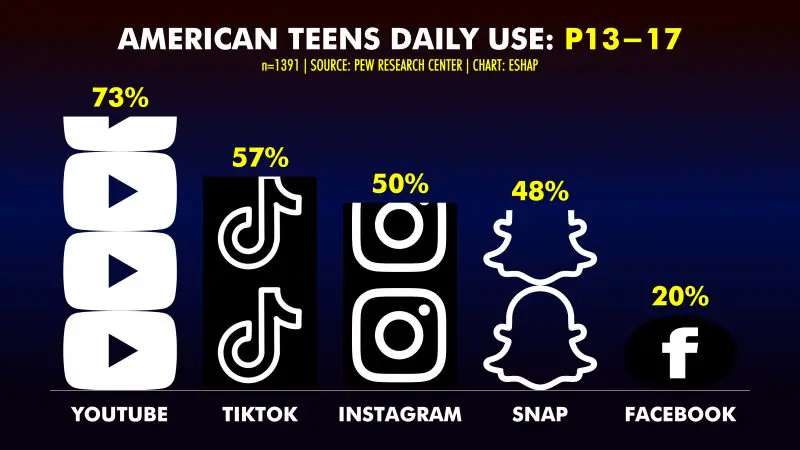
Our favorite Philly-bred genius Evan Shapiro made this point in his usual succinct and eye-opening manner when he shared some recent Pew Research Center data that shows teenagers are more than a quarter more likely to use YouTube in a given day than TikTok, and nearly half more likely than “the ‘Gram”. And as Shapiro elaborated, that’s merely the tip of an iceberg that is apparently extending even younger:
Suffice to say, YouTube on TV is a habit now shared across genres and generations. But for younger viewers, it is TV’s most important channel. YouTube on TV is not just a thing young people do, it’s something that their parents reinforce.
 YouTube is the top kids channel on earth. On YouTube 3.2 million people have watched the Oscar winning documentary “20 Days in Mariupol,” most on TVs. 400 million hours of podcasts are viewed on YouTube, on TV, EVERY MONTH.
And gere I’ve been struggling with how to incorporate those “cool” resources more and more into my routines and as it turned out at least in this sense I’m already part of Generation Alpha.
Nielsen, of course, has been crowing about how YT is far and away the dominant U.S. video destination already with their partial-lens monthly recap THE GAUGE. The press release accompanying the most recent iteration, based on data from the November “sweeps” (and how archaic is THAT?) , reminded us exactly how dominant it still is:
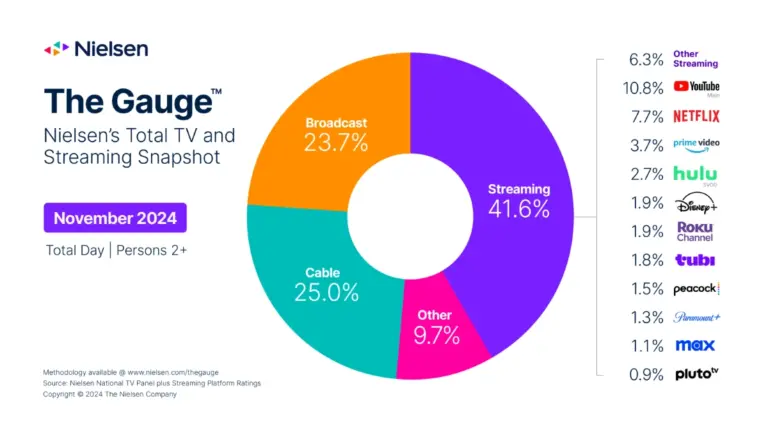 YouTube continued to be the dominant platform that people turned to for streaming entertainment, capturing 10.8 percent of all time spent with TV. Excluding YouTube, Netflix was the dominant streaming service at 7.7 percent, followed by Amazon’s Prime Video with 3.7 percent.
But even more interestingly, that narrative is beginning to be echoed beyond the United States in territories where Nielsen is the legacy measurement currency–even where legacy media is still proportionately stronger. Take, for example, the November results in Poland:
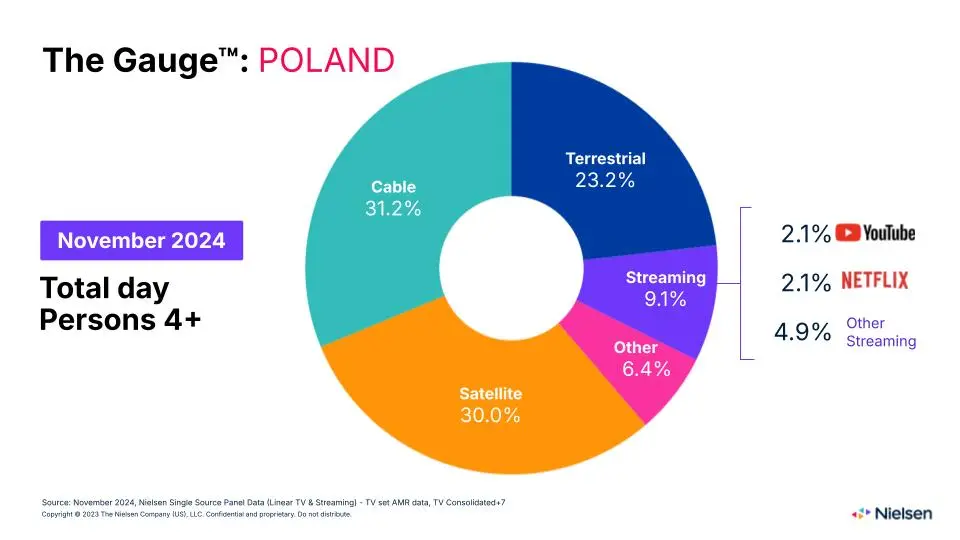 (T)he share of streaming viewing on TV screens reached a record 9.1%—the highest level since the launch of the Gauge in Poland in January 2023. The ranking of streaming services is jointly led by Netflix and YouTube, each holding a 2.1% share of content watched on Polish TV screens.
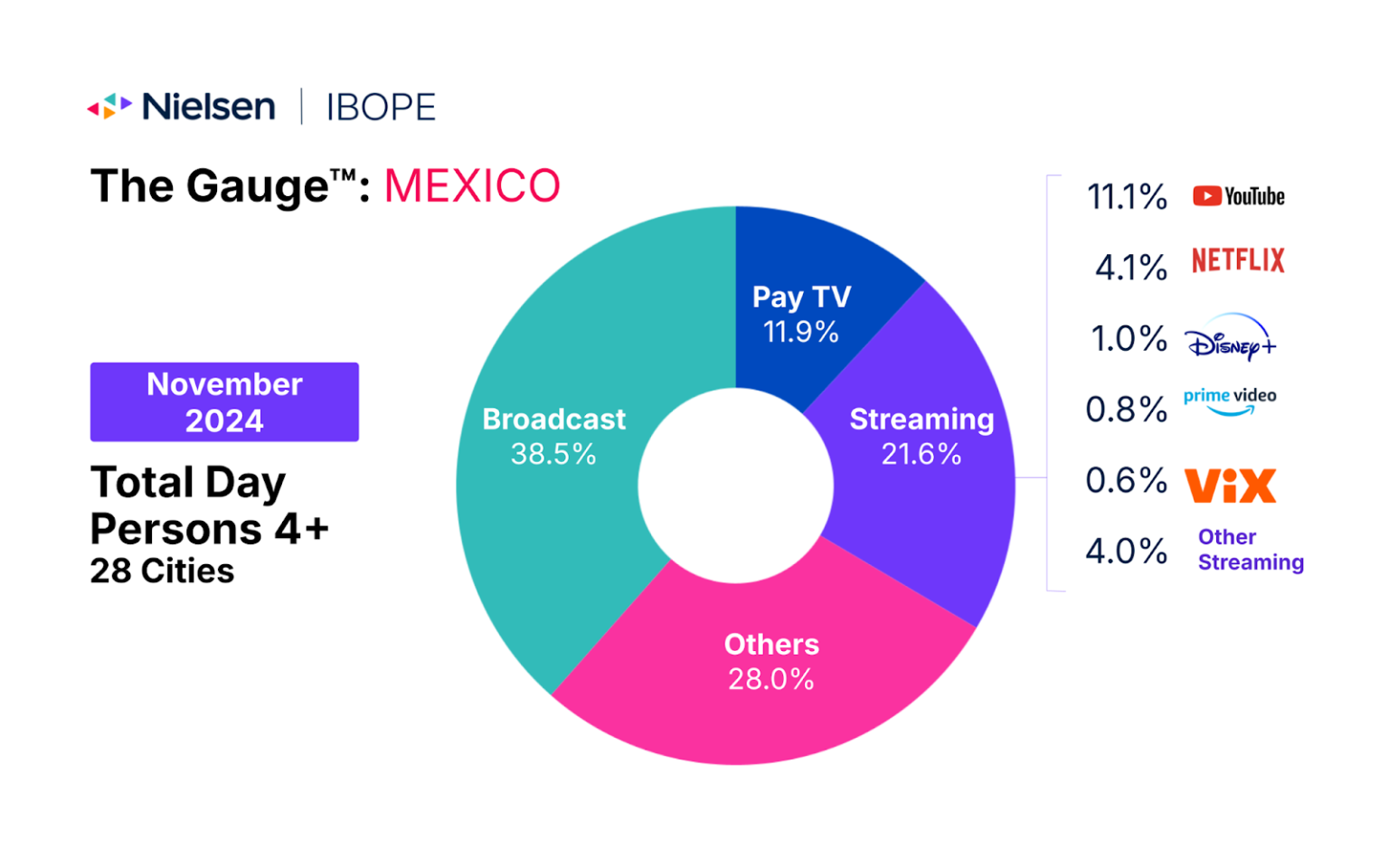 And in Mexico, where streaming is still at roughly half the proportion as the U.S., YouTube makes up more than half of it–at an even greater total proportion of video consumption than what’s going on here.
A GMI Research Team report released earlier this month brings all of those numbers into even clearer context:
For sharing videos or advertising, there exists no other platform as rewarding as YouTube on the planet now.
There has never been a website in the past decade that gives us opportunities to become popular overnight and make money online by just uploading videos. In 2022, the number of YouTube viewers was 210 million in the US alone! YouTube’s global users are expected to reach 2.85 billion by 2025, thanks to the content diversity it offers.
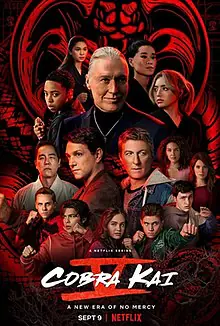 Which is why as the service enters its 20th year of existence, I’m making the bold prediction that it is now mature enough to revisit a decision they reached several years ago when they reversed course on how reliant they would be on scripted content, jettisoning a competent and experienced team led by onetime cable executive Susanne Daniels. The mistake of that team was that they were relying upon established monolithic media suppliers to provide what had been hoped to be drivers for subscribers. As part of a team that supplied them with perhaps their only measurably successful effort in that, COBRA KAI, I can speak with atypical clarity as to how far off we all were with that approach.
But as Shapiro shrewdly asserts, we are clearly at a tipping point where we are no longer beholden to those sorts of guideposts for what we believe to be valuable content:
YouTube is the perfect TV for the User-Centric Era: Combining corporate-made Media such as sports and entertainment with Creator-led content such as podcasts and how-to videos, crucially, allowing “premium” to be defined by the user, not the gatekeeper. If someone watches YouTube on their TV, no matter what they watch, to them, it’s premium.
So I’m convinced that some entreprenurial creative, perhaps flush with the bucks they’ve made from generating unscripted content and influencing, has some sort of romcom, thriller or faith-based storytelling where funding from sponsors and/or crowdsourcing is readily available. With a potential reach of two-thirds of the U.S. and nearly three billion folks around the world, one doesn’t exactly need a huge “rating” to make all of that back and then some. And if they need any help navigating all of this, think of all of the experienced folk who have been cast out of the traditional media companies whose talents are now readily for hire (hand raised with emphasis and Arnold Horshack-like intensity).
 What, you don’t know who Arnold Horshack was? As my bestie implores under such circumstances, “Google” it. You know, those upstarts that own YouTube. If I can figure that out, you certainly can, too.
Until next time..