
One of the more colorful–literally–peddlers of content I’ve ever dealt with was a glib silver-maned salesman who insisted his “friends” refer to him as “The Colonel”. He supposedly was a war veteran, but you wouldn’t know it from his garish fashion choices–almost always preferring light-colored sweater vests to dark suit jackets. Among the titles he represented was the movie DEATH WISH–the OG version that cemented Charles Bronson as a movie anti-hero–and its less successful sequels. It was not a well-liked movie by broadcast networks; as SCREEN RANT.com noted, it was an ugly, dispiriting action film that features unnecessarily graphic assault scenes. It was therefore a more recent vintage film that was made available exclusively to local TV stations who were carving out identities by counterprogramming their prime time lineups with nightly movies. And in market after market, regardless of location or station strength, virtually any version of DEATH WISH (thanks to the way ratings diaries were filled out) was a top performer.
 “The Colonel”, knowing what resonated with moi, would show me flashcard after flashcard with these stories and noticed my autonomic nods of approval. He’d then fold his arms and confidently say “You know why this is, Young Man? Three words. Bronson. Bronson. Bronson”. I always went to bat with my superiors to try and make a deal with “The Colonel”, and every now and then I’d actually do one. As I’ve so often noted, numbers don’t lie, only the people spinning them do.
 So when we are confronted with tragic news and subsequently uncomfortable debates such as what has dominated the news cycle in the wake of the murder of United HealthCare CEO Brian Thompson, my immediate thoughts are not with his grieving family, or with the still at large shooter whose actual motivation is still unknown. No, I’m looking squarely into the minds of those who are pouring out their own feelings on social media and elsewhere that are justifying, or even supporting, why Thompson’s demise might have been mere collateral damage to a broken society.
As Matt Ford authored this past weekend in an opinion piece for THE NEW REPUBLIC:
The murder of UnitedHealthcare CEO Brian Thompson in New York City on Wednesday appears to be the first successful assassination of a national political figure in the United States in the twenty-fi(r)st century. Thompson was not an elected official, of course, but he wielded more power than most of them as head of the nation’s largest health insurance provider.
 The New York City Police Department has not yet arrested the suspect in the shooting, so the precise motive of the gunman is not yet known. But we can make a pretty good guess about it from the current evidence. Thompson’s wife told The New York Post that her husband regularly received death threats over claim denials. At the scene of the shooting, investigators found shell casings with the words “deny,” “defend,” and “depose” on them—an apparent reference to “delay, deny, defend,” a phrase describing tactics by health insurance companies to refuse coverage for their customers.
Thompson’s death appears to stem from simmering public discontent over how the U.S. health insurance industry operates. But the killing—and especially the public response to it—says less about the state of American health care than it does about the state of our democracy. As Americans have fewer and fewer lawful means to peacefully address social and economic issues or resolve disputes among themselves, targeted killings like this may only become more common.
Such an argument, no matter how outrageous the more high-minded of us may perceive it to be, is apparently resonating broader and more impactfully than the one which SALON’s Alex Galbraith conveyed on Saturday:
UnitedHealth Group CEO Andrew Witty is appalled by the reaction to the murder of his company’s head insurance man Brian Thompson. The extensive media coverage and at times gleeful response to the murder on social media were too “I’m sure everybody has been disturbed by the amount of negative and in many cases vitriolic media and commentary that has been produced over the last few days, particularly in the social media environment,” he shared in the video, which doubled as a warning to employees to keep mum when journalists come calling. “People are writing things we simply don’t recognize [that] are aggressive, inappropriate and disrespectful.”much for the exec. He called the tone of coverage “frankly offensive” in a video message to employees that was leaked to journalist Ken Klippenstein.
Indisputable, of course. But you try selling that to someone who may have seen some version of DEATH WISH–even the even less well-received 2018 remake that saw Bruce Willis in the title role.
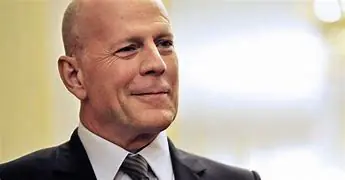 Ironically, not long after this effort, Willis was diagnosed with, as recently reported in detail by NEWSWEEK’s Sophie Hessekeel, “frontotemporal dementia, aka FTD, a degenerative disease that primarily affects communication and behavior.” FTD was the root cause of the aphasia.
Wanna bet his health insurance claim wasn’t denied?
The Paul Kerseys of fiction aren’t the only examples of vigilante justice that have been glorified. Movies and TV have also given us Michael Douglas’ William Foster in FALLING DOWN, Bryan Cranston’s Walter White in BREAKING BAD and Michael Chiklis’ Vic Mackey in THE SHIELD. A subway rider named Bernard Goetz became a New York City folk hero in the early 1980s by paralleling the actions that Kersey/Bronson took in the original DEATH WISH. And, more recently, a whole lot of cosplaying “patriots” did their best to claim a few lives through a “peaceful tour” of the Capitol, and they’re all apparently about to receive pardons.
 Murder, assuming that eventually becomes the charge that sticks (there’s always the potential of pleabargaining due to mental illness, and one would suspect those shell casings alone might be Exhibit A in such a defense), is horrible and reprehensible. But unless you’ve actually walked in the shoes of the mystery gunman, who is somehow now also creating a following as a thirst trap, to simply dismiss these actions completely without any sort of pausing one’s own moral compass would be as sad a commentary on the polarized state of our society as anything else that might be making headlines these days.
Maybe the thoughts of former WASHINGTON POST writer Taylor Lorenz are a tad too radical. Even the attempt at a walkback seemed to fall short, as FOX NEWS’ Kristine Parks reported last week, comes off as more than a mite shallow:
(I)n a lengthy screed posted to her Substack the next day…entitled, “Why ‘we’ want insurance executives dead,” Lorenz denied she was calling for the murder of more top executives before seeming to justify her harsh comments from the day before.
 “Let me be super clear: my post uses a collective ‘we’ and is explaining the public sentiment. It is not me personally saying ‘I want these executives dead and so we should kill them,'” Lorenz said. “I am explaining that thousands of Americans (myself included) are fed up with our barbaric healthcare system and the people at the top who rake in millions while inflicting pain, suffering, and death on millions of innocent people.”
She continued, “If you have watched a loved one die because an insurance conglomerate has denied their life saving treatment as a cost cutting measure, yes, it’s natural to wish that the people who run such conglomerates would suffer the same fate.”
I’m willing to bet that she, or more likely her loved one, at some point was among those viewers that The Colonel bragged about. The numbers certainly would point to the likelihood of it.
Until next time…